
Self-Cleaning Bernoulli Filters
Self-cleaning filters or self-cleaning strainers are innovative and efficient filtration systems that utilize their own system pressure to clean the clogged particles or dirt after a period of time. Self-cleaning filters/strainers allow clean fluid to flow through the system while removing particles or dirt.
We have to handle everything manually in conventional filter types, including cleaning the filter when strainers get clogged. This process consumes time & filtration processes stop during the cleaning process. Therefore, improved technologies were introduced to the industry to make life easy. Automatic self-cleaning filters and industrial strainers are examples of high technologies that have worry-free operations.
Clean water is vitally important in the industrial world during production for diluting, washing, fabricating, or cooling the equipment used for the manufacturing of their products. However, even though water free from impurities is necessary for the production process, everyone worldwide does not enjoy it. Because modern water supply sources are often strongly polluted, a sound water filtration system with a self-cleaning ability is a mandatory investment to enjoy a safe industrial water supply for production purposes.
Self-cleaning strainers/filters provide ideal filtration solutions with money, water, maintenance, equipment replacement, and energy savings. These filtering systems are also called automatic self-cleaning filters/strainers, as this improved technology requires no routine maintenance. An automatic self-cleaning filter/strainer will not need constant changes in operational parameters and system shutdowns like conventional filtration systems, requiring frequent inspections and system shutdowns for maintenance like backwashing.
Critical features of automatic self-cleaning filters/strainers
- Continuous backflushing during the process lifecycle
- Constant differential pressure monitoring
- Full rotation of cleaning element
- Replaceable straining and filtering elements
- Light rotating element
- Water-lubricated rubber lower bearing
- Large blow-down connection
- In-line nozzles
Key features to be considered when Buying Self-cleaning Filters
There are different varieties of automatic self-cleaning filters available in the market. Hence choosing a suitable automatic self-cleaning filter/ industrial strainer that will work for you can be challenging. Here are some tips to consider.
The Operating conditions of your application
It is imperative to match your operating conditions of the fluid, such as temperature and pressure, with the operational limits of the automatic self-cleaning filter/ industrial strainer to determine or pick the best automatic self-cleaning filter/ industrial strainer that will satisfy your operating conditions.
Kind of contaminant
Identifying the type of contaminant present in your fluid is very important when choosing an automatic self-cleaning filter/ industrial strainer. Because depending on the sizes of contaminants present in the liquid, the type of automatic self-cleaning filter/ industrial strainer will vary.
A large self-cleaning filter must be used for the fluids with large contaminants, while micro self-cleaning filters must be used to remove micro contaminants.
Cost-effectiveness
Consideration should be given to the labour and the cost of installing and replacing the self-cleaning filter.
The quality of filtration
Your expectation on the quality of filtration must be considered when buying an automatic self-cleaning filter/ industrial strainer. Different self-cleaning filters will give you different fluid filtration qualities.
Nature of the process of your application
It is crucial to determine the nature of the filtration process of your application, such as a batch process or a continuous process.
You need to install a self-cleaning filter that will not stop the function if your application is a continuous process. Further, suppose your application is a batch process. In that case, you need to consider the duration of the batch to choose a suitable automatic self-cleaning filter/ industrial strainer that will work efficiently during this period.
Applications of Self-cleaning Filters
- Sewage Treatment
- Water Treatment
- Farming Application
- Food Processing Industry
- Electricity Generation
Advantages
- Frequent cleaning is unnecessary, which will save money on labour.
- Provide better safety to the operators. Since this system is completely enclosed, no hazardous product such as fumes can escape while functioning. Hence it limits the operator’s exposure to hazardous products.
- Improve your product quality – Since this is an enclosed system, the risk of contamination entering your production line is eliminated.
- Reduce operation costs, and waste – The need of replacing filter media, labour costs, and disposal costs are eliminated in this system.
- As the cleaning process is automatic, no damage can be done to the strainer.
- Variable loading rates could occur during the process. Hence scheduling a manual cleaning can be problematic if the unit is not automatic.
Self-cleaning Bernoulli Filters
The cleaning process of the self-cleaning Bernoulli filters work according to Bernoulli’s principle, which was born long ago by combining the velocity and height of fluid at one point along with its flow. It states that an increase in a fluid’s flow velocity gives rise to a drop in static pressure.
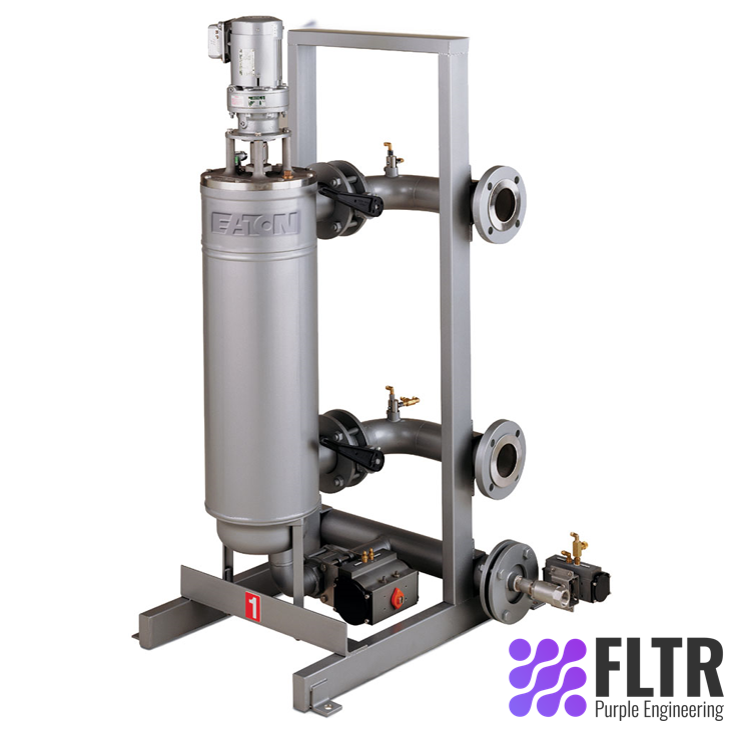
This fascinating concept is utilized in the self-cleaning Bernoulli filter’s cleaning mechanism. The distinguishing feature of this self-cleaning filter is that it is single or multi; the filter consists of a disc mounted on a pneumatic cylinder, which allows contactless cleaning of the filter. The sequence of self-cleaning filtration is automatic and continues even at the flushing stage. Some unique features such as having very few moving parts and lower flushing pressure make Bernoulli filter doubtlessly special filters in the industry.
In the late 80s, Ulf Steiner and his research team developed an automatic and self-cleaning filter to protect Plate Heat Exchange(PHE). The clogging issue of PHE led him to invent this filter with unique features. As a result, this filter has a unique design for water filtration. Moreover, these filters have only a few moving parts, and these filters can be readily used for corrosion-free seawater filtration.
Bernoulli self-cleaning filters are designed with fully automated filter options to continuously perform water filtration in a pressurized environment. During the self-cleaning filtration process, it readily removes debris coming into the system from process liquids and a variety of natural water sources such as a lake, river, sea, etc. In addition, since this is a corrosion-free self-filtration system, seawater can be filtered without hesitation. Bernoulli self-cleaning filters act as pressure filters and are installed downstream of the feed pump.
Why is a self-cleaning Bernoulli filter also known as a non-interruption filter?
One plus point where the Bernoulli self-cleaning filters attract a large audience is their ability to continue the filtration process even when the filter is in the flushing mode. As the piston travels only about 2/3 of the length of the filter basket, the regular cleaning process can be carried out without any disturbance.
Another unique feature is that no matter if the filter basket is cleaned or filled with debris particles or the filter is being flushed, the pressure drop over the filter is steady. This gives the idea of an effective open area of the filter, which is the area in the wall of the filter basket that allows filtration divided by the total basket wall area.
Typical applications of Self-cleaning Bernoulli Filters
The main job of the Bernoulli self-cleaning filter is to capture the suspended solids in the source water.
The range of applications varies from pre-filtration in the water purification process to safeguarding the PHEs and other downstream equipment such as spray nozzles. These filters are used in broad spectra of industries such as:
- Petrochemicals
- power generation
- aquaculture
- pulp and paper
- steel making
- Pharmaceuticals
- Food and beverages
Advantages of using self-cleaning Bernoulli filters:
- Requires only a low washing pressure
- It can be easily installed
- Maintenance is easy
- Have only a few moving parts
- Pressure is stable in both clean and dirty conditions.
Our products cover a range of Bernoulli Filters that allow for the contactless cleaning of the filter. Those filtration systems will help you enhance operational efficiency and improve product quality.
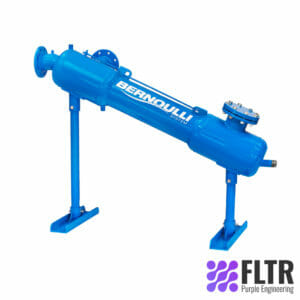
Manual Bernoulli Filters
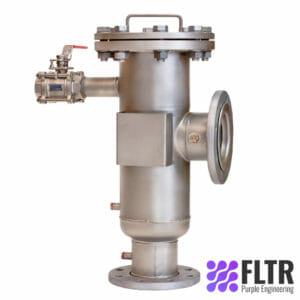
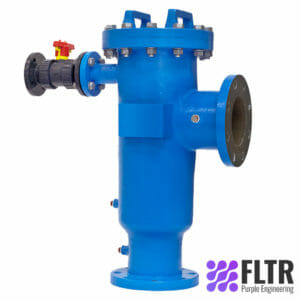
Our manual filters can be used as by-pass filters (with an automatic filter) or as guard/police filters.
Automatic Single Basket & Multi Basket Bernoulli Filters
There are three typical product lines for our single basket Bernoulli Filter product.
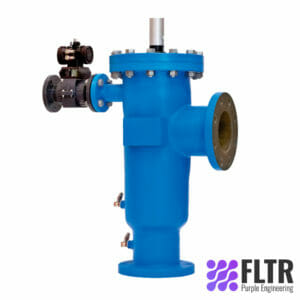
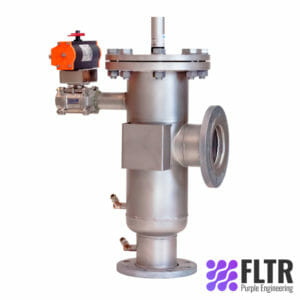
This product line was introduced to meet the tough corrosion challenges faced by products operating with seawater. With its design in GRP (glass fibre reinforced polyester), the filter benefits from material durability and significant weight savings.
With its design in stainless steel 316L, the BSS product line serves the needs of industries where stainless steel 316L is the material of choice.
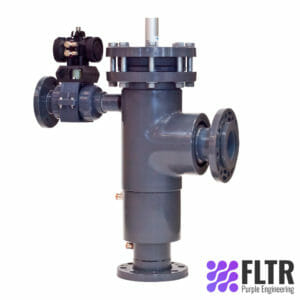
The BSP product line was created to provide a cost-effective solution for small-capacity applications. PVC is used to create a BSP filter (Polyvinyl chloride).
The Bernoulli Filter with Multi Basket was created in response to the market need for finer filtration combined with greater capacities. Thanks to multiple filter baskets in one filter body, fine filtration down to 100 microns are achievable, even at high flow rates. This means that one single multi-basket unit can do the work of multiple smaller single basket units. The result is a space-efficient installation that requires less piping.
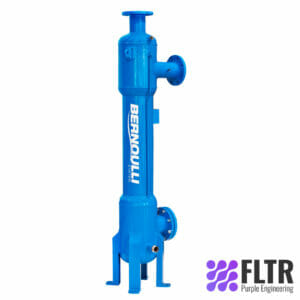
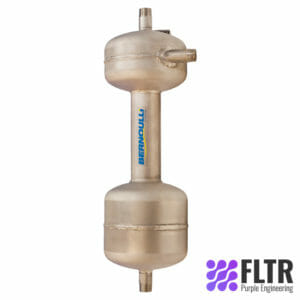
Centrifugal Separators
The centrifugal force ensures centrifugal separation, and the separator’s efficiency is directly related to the particles’ specific density and size distribution. The separator removes 98 percent of the particles with a specific gravity of 2.6-2.8.
Enter Keyword or Part Number
Then press enter for search results